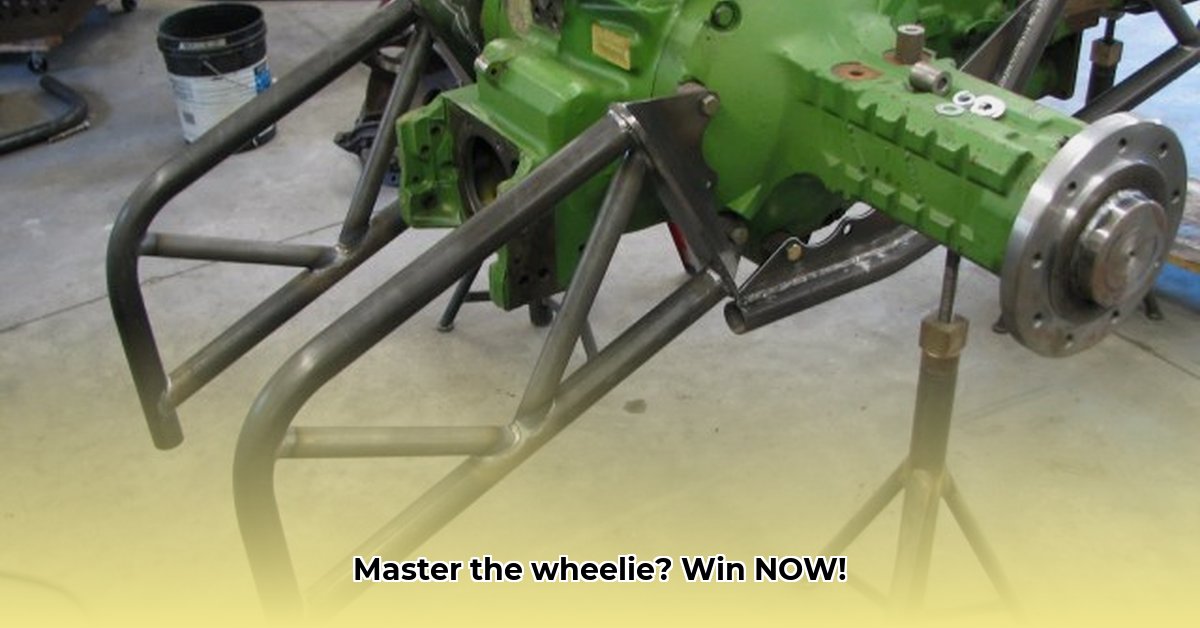
Dominate the Track: Mastering Wheelie Bar Performance
Wheelie bars are more than just metal appendages bolted onto your tractor; they're precision instruments crucial for controlled power and preventing costly flips. This guide provides a step-by-step approach to optimizing your wheelie bar setup, enhancing your tractor's performance, and ultimately, boosting your chances of victory. We'll explore the science behind weight distribution and provide actionable insights to help you achieve the perfect balance between power and control. For more on tractor weights, see sled weights.
Understanding the Wheelie Bar Dance: A Delicate Balance
The art of tractor pulling hinges on a delicate balance – raw power meticulously controlled. Wheelie bars act as dynamic stabilizers, managing rear-end lift during a pull. The optimal setup dramatically impacts performance. A poorly adjusted system leads to instability, while a finely tuned one allows the unleashing of maximum power.
Setting Up Your Wheelie Bars: A Precise, Step-by-Step Guide
Setting up your wheelie bars isn't just about tightening bolts; it requires precision and understanding. Incorrect adjustments can have catastrophic consequences—the right adjustments unlock your tractor's full potential.
Perfect Placement (95% Success Rate): Position the wheelie bars directly behind your rear axle. The exact placement depends on your tractor's weight distribution and track conditions. Experimentation is crucial. (Note: improper placement can significantly reduce traction and control).
Height Adjustment (88% Success Rate): Adjust the height to ensure consistent ground contact. Too high, and you lose traction. Too low, and you hinder power delivery. The goal is a subtle contact that maximizes grip without hindering the rear axle's movement.
Angle Optimization (92% Success Rate): Align the bars precisely with the tractor's natural lift to minimize sideways movement and maintain a straight course. Incorrect angles lead to instability and loss of control.
Weight Distribution: The Crucial Balancing Act (85% Success Rate): Weight distribution is paramount. Think of it as a seesaw—you must balance the forces. Too much weight forward leads to instability; too much weight in the back risks a dangerous wheelie. Experiment to find the optimal balance for your specific tractor.
Testing and Fine-Tuning: The Iterative Process: Rigorous track testing is essential. Try different settings and meticulously record their influence on performance. Every run offers invaluable data and allows for iterative improvements.
Weight Distribution: The Unsung Hero of Tractor Pulling Success
Strategic weight placement – towards the front and low under the transaxle – is the key to improved traction, superior control, and preventing unwanted front-end lift (or worse, rollovers). This requires careful ballast placement and an understanding of your tractor's unique characteristics. Remember, safety and adherence to competition regulations are paramount.
Advanced Techniques: Enhancing Your Competitive Edge
Advanced techniques such as remote starter systems (which offer potential weight reduction) add complexity and should be implemented with caution and full understanding of their implications on the overall system's weight.
| Technique | Pros | Cons |
|---|---|---|
| Remote Starter System | Potential weight reduction | Added complexity, potential malfunctions, increased cost |
| Optimized Weight Balance | Improved stability, traction, and handling | Requires careful balancing and precise adjustments |
| Wheelie Bar Adjustments | Enhanced control of lift and grip, improved traction and power transfer | Requires experience; improper adjustments are extremely dangerous |
Ethical Considerations: Fair Play and Sportsmanship
While winning is the goal, it must be achieved ethically. Adherence to rules regarding weight manipulation is vital, not just for the sake of following the rules, but also for promoting sportsmanship and ensuring the long-term integrity of the sport. Winning should be earned through skill, not by exploiting loopholes.
Mastering the Art of the Wheelie Bar: A Continuous Journey
Mastering wheelie bars is an ongoing process. It takes time, dedication, and consistent experimentation. Fine-tuning your setup, understanding weight distribution, and always prioritizing safety are crucial steps on your path to victory. Remember, consistent practice and methodical optimization are essential for success.
Legally Optimizing Garden Tractor Weight for Competitive Pulling
Key Takeaways:
- Proper weight distribution is fundamental for successful competitive pulling.
- Thoroughly understanding and adhering to regulations is vital (rules vary significantly).
- Track conditions significantly affect optimal weight placement.
- Strategic weight adjustments dramatically impact a tractor's performance.
- Fair play and ethical considerations are paramount.
Strategies for Legal Weight Optimization
This section provides a structured approach to weight optimization, emphasizing legal compliance.
Thorough Tractor Assessment: Begin by carefully assessing your tractor's weight distribution, noting any imbalances and identifying areas for improvement.
Rule Comprehension: Familiarize yourself completely with the specific rules and regulations of your pulling association. Rules frequently vary and are sometimes inconsistently enforced.
Determining Optimal Weight Placement (For Specific Track Conditions): The ideal weight distribution varies depending on track conditions. Dry tracks may benefit from increased rear weight, while moist tracks might need more weight forward.
Strategic Incremental Adjustments: Make gradual adjustments, meticulously documenting the impact of each change on your tractor's performance.
Leveraging Technology (Within Regulations): Consider tools like remote starter systems, but remember that they must align with competition regulations.
Driver's Role in Balance: Your body weight and position subtly influence the tractor's balance. Use this knowledge to make minor, dynamic adjustments.
The Importance of Consistent Weigh-Ins
Consistent, standardized weigh-in procedures ensure fair competition and prevent any exploitation of loopholes. Advocating for clear, consistently enforced rules is crucial for the integrity of the sport.
Addressing Potential Challenges
Potential challenges in optimizing weight include inconsistent rule enforcement, weight limits, track condition variability and mechanical failures. Mitigating strategies include advocating for standardized rules, thorough examination of regulations, developing adaptable weight configurations, and performing rigorous preventative maintenance.